
Skip to product information


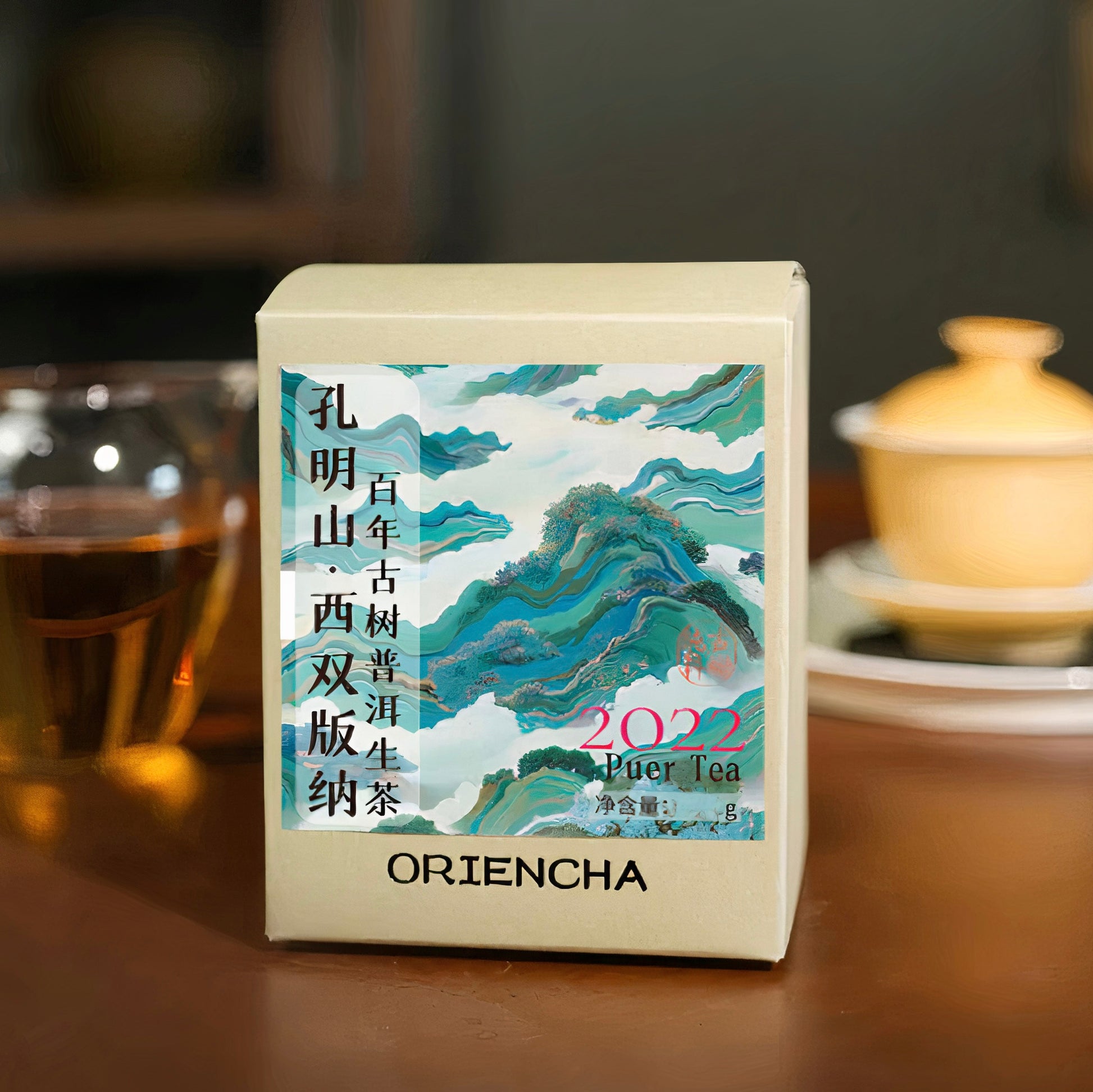


Kongming Mountain – Ancient Tree Raw Pu-erh Tea
$23.00
Shipping calculated at checkout.
A distinctive 2022 raw Pu-erh from Kongming Mountain in Mengla County, Xishuangbanna, Yunnan, crafted from ancient medium- and small-leaf tea trees growing at around 1,900 meters in the misty forests of the Six Great Ancient Tea Mountains. Rich in mountain character and traditional heritage, the tea combines bold wild energy with smooth sweetness and elegant depth. Its high-altitude origin and mature-tree material give it a distinctive character that can be enjoyed today while offering strong potential for long-term aging.
Fresh floral aromas rise from the dry leaves, accompanied by a clear, lively mountain fragrance. The liquor is full-bodied yet silky smooth, with low bitterness and only a gentle sharpness. A powerful sweetness quickly develops across the palate and extends deep into the throat, creating a pronounced and long-lasting Huigan. Clean, textured, and highly expressive, the tea remains flavorful through multiple infusions, gradually revealing softer floral notes, deeper sweetness, and changing layers of mountain character.
Carefully processed as traditional raw Pu-erh, the tea preserves the natural character of its ancient-tree leaves and the distinctive terroir of Kongming Mountain. Growing in cool, mist-covered forests at high elevation allows the leaves to develop strong aromatic compounds and a rich, concentrated character, while the traditional processing keeps the tea unoxidized and capable of further transformation. With proper storage, its initially vibrant mountain energy can gradually soften and integrate, developing greater smoothness, depth, and aromatic complexity over the years.
Pickup currently not available